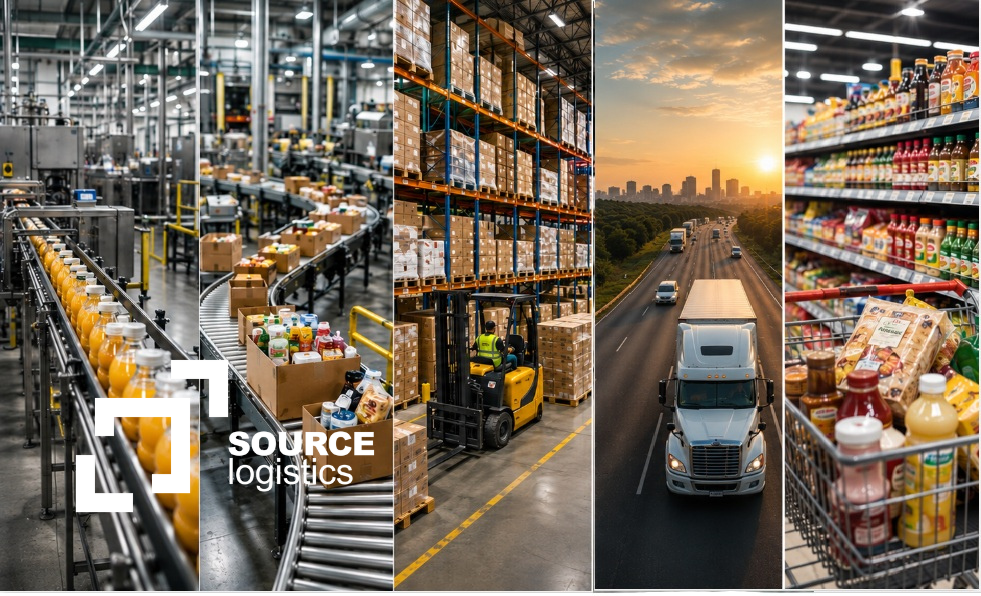
CPG logistics is the set of supply chain operations that moves consumer packaged goods from a manufacturer or importer through storage, fulfillment, and transportation to retail shelves, distribution centers, or direct-to-consumer addresses. It includes warehousing, order processing, value-added services, compliance management, and the technology systems that connect each step.
What Does CPG Stand For?
CPG stands for consumer packaged goods. These are products sold in retail stores and online in standardized, branded packaging that consumers purchase regularly and replace frequently. Food and beverages, household cleaning products, personal care items, baby products, and pet supplies are all CPG categories.
The logistics requirements for CPG differ from industrial or durable goods because of high order frequency, strict retailer compliance standards, short shelf lives for perishable items, and the need to serve multiple channels simultaneously.
Core Components of CPG Logistics
Warehousing and Inventory Management
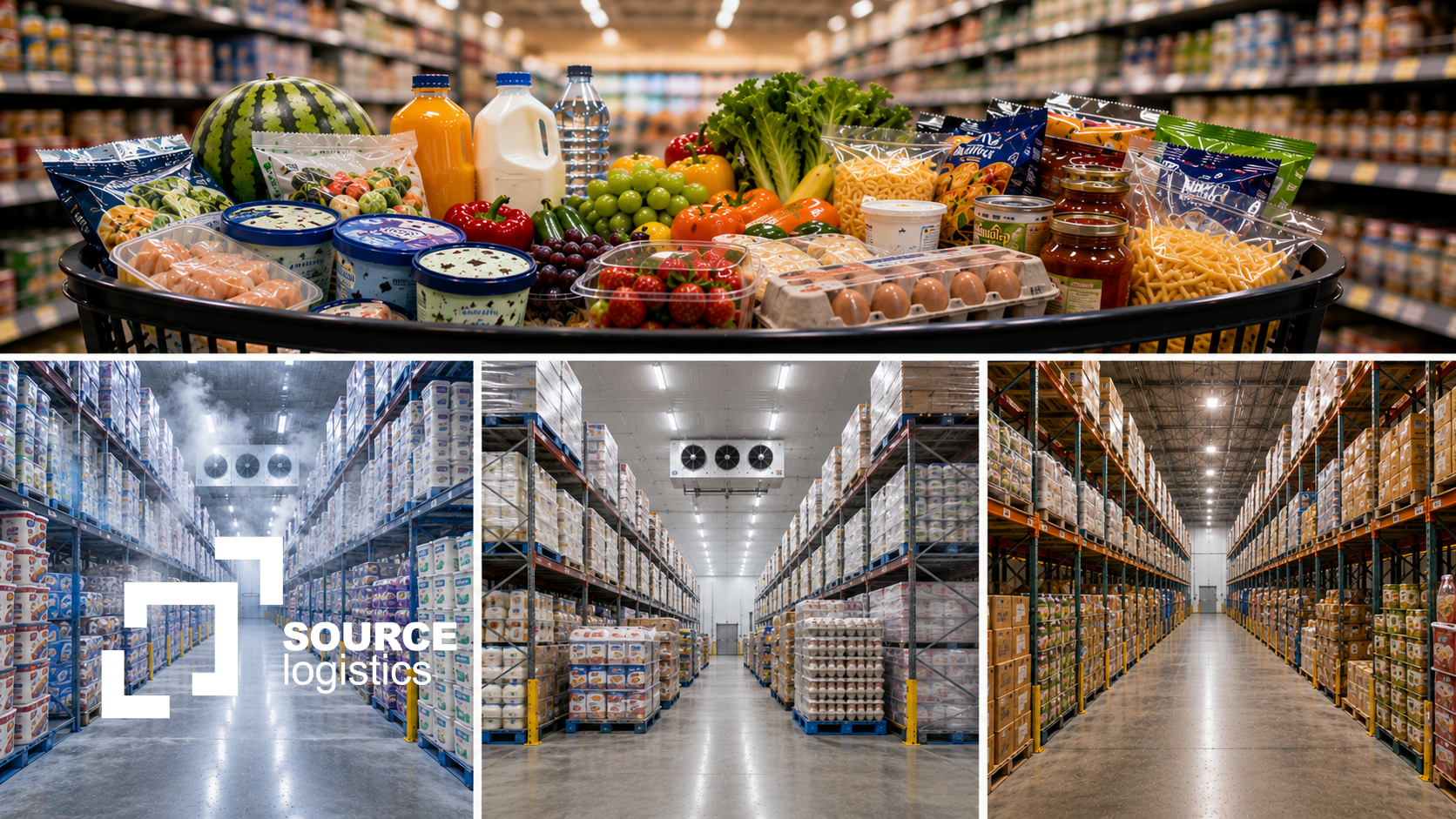
CPG products require storage environments matched to their temperature sensitivity. Shelf-stable items such as snacks or household cleaners ship through ambient warehouses. Refrigerated beverages and dairy require chilled storage. Frozen foods require maintained sub-zero environments. A 3PL handling CPG across categories needs multi-temperature capability under one roof or within a coordinated network.
Inventory management in CPG warehousing uses first-expired, first-out (FEFO) rotation to reduce expiration-related shrink. Lot and batch tracking provides the traceability that food safety regulations and retailer compliance programs require. Real-time inventory visibility across all storage locations allows brands to plan replenishment before gaps occur.
Fulfillment and Order Processing
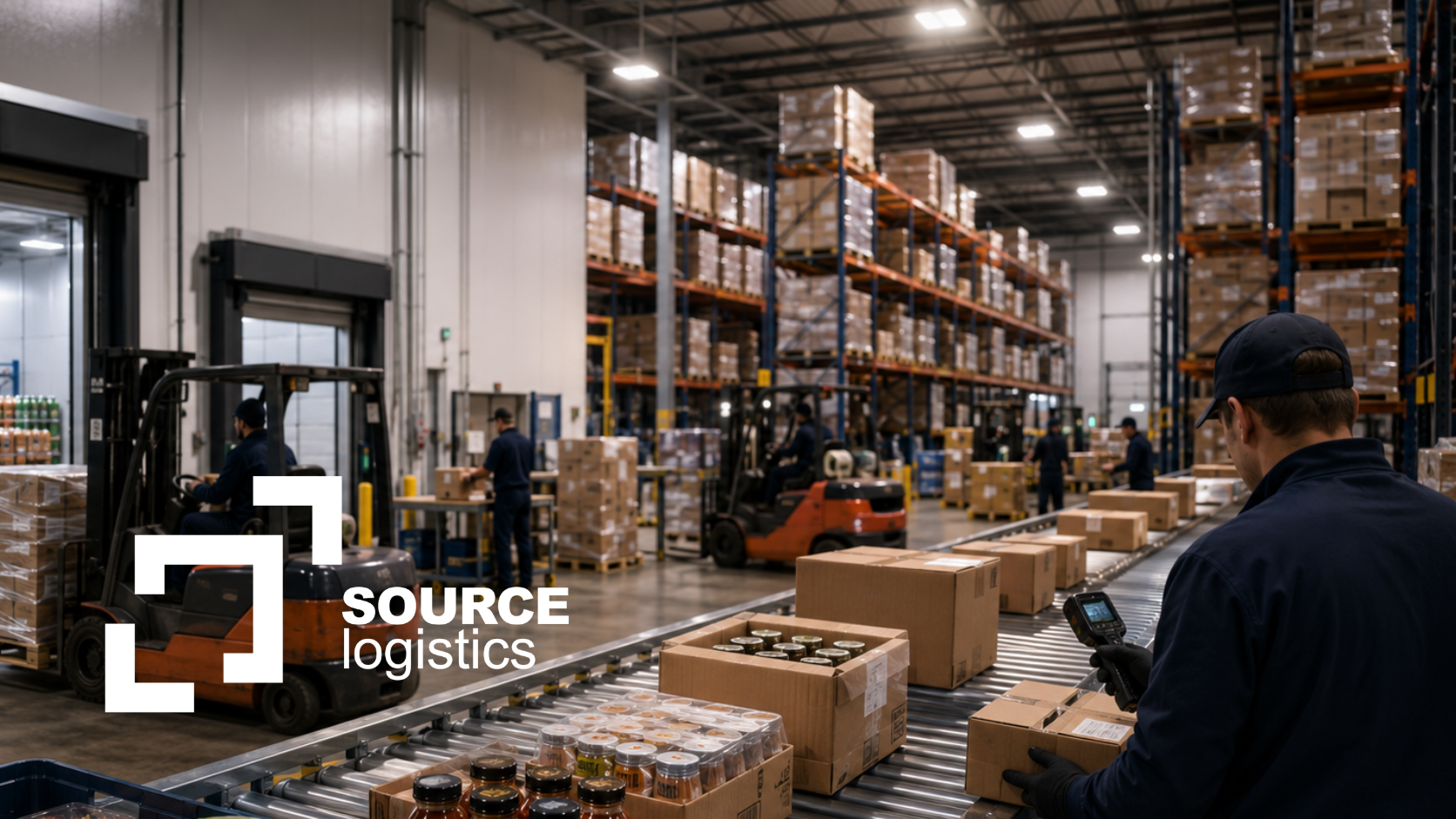
CPG fulfillment operates across several distinct order types. Retail replenishment orders ship pallets or cases to retailer distribution centers with specific pallet configurations, label placements, and documentation requirements. Club channel orders ship multipacks or bulk cases to warehouse club DCs. Ecommerce and D2C orders require individual unit pick, protective packaging, and carrier-compliant parcel labeling.
Each channel has different service level expectations. A retailer DC expects pallet-level OTIF compliance. An ecommerce customer expects a delivered parcel within a stated window. A CPG 3PL manages all of these simultaneously from a single inventory position.
Transportation
CPG transportation covers inbound freight from manufacturers or ports to distribution facilities, and outbound freight from distribution to retail DCs, stores, or consumers. For temperature-sensitive products, temperature-controlled trailers and documented chain-of-custody records are required throughout transit. Appointment window compliance is critical for retail delivery, as missed appointments trigger OTIF chargebacks from major retailers.
Value-Added Services
Value-added services (VAS) include work performed on a product between receipt and shipment. Common CPG VAS includes labeling and date coding, kitting and multipack assembly, compliance re-packaging for retailer-specific requirements, allergen zone segregation, and display pallet builds. These services are typically performed in the 3PL facility, eliminating the need for a separate co-packer.
Retailer Compliance Management
Major retailers impose detailed compliance requirements for every inbound shipment. These cover pallet patterns, GS1 label placement, date code formats, UPC accuracy, advance ship notice (ASN) timing, and carrier routing. Non-compliance triggers chargebacks that can represent 2 to 5 percent of gross sales for some CPG suppliers (Supply Chain Management Review).
A 3PL with retailer-specific compliance workflows built into its quality control process reduces chargeback exposure at the source rather than requiring dispute resolution after the fact.
Why CPG Brands Use Third-Party Logistics Providers
Building in-house logistics infrastructure at CPG scale requires capital investment in facility space, technology, labor, and carrier relationships that most brands cannot justify, particularly during a growth phase. A 3PL provides immediate access to a multi-temperature network, established retailer compliance programs, omnichannel fulfillment systems, and transportation capacity, without the capital overhead.
As CPG brands expand into new channels, geographies, or seasonal peaks, a 3PL scales with the demand rather than requiring parallel infrastructure investments. This is especially relevant for summer peak season planning, where brands need surge capacity for a defined window rather than year-round fixed capacity.
Getting Started With CPG Logistics at Source
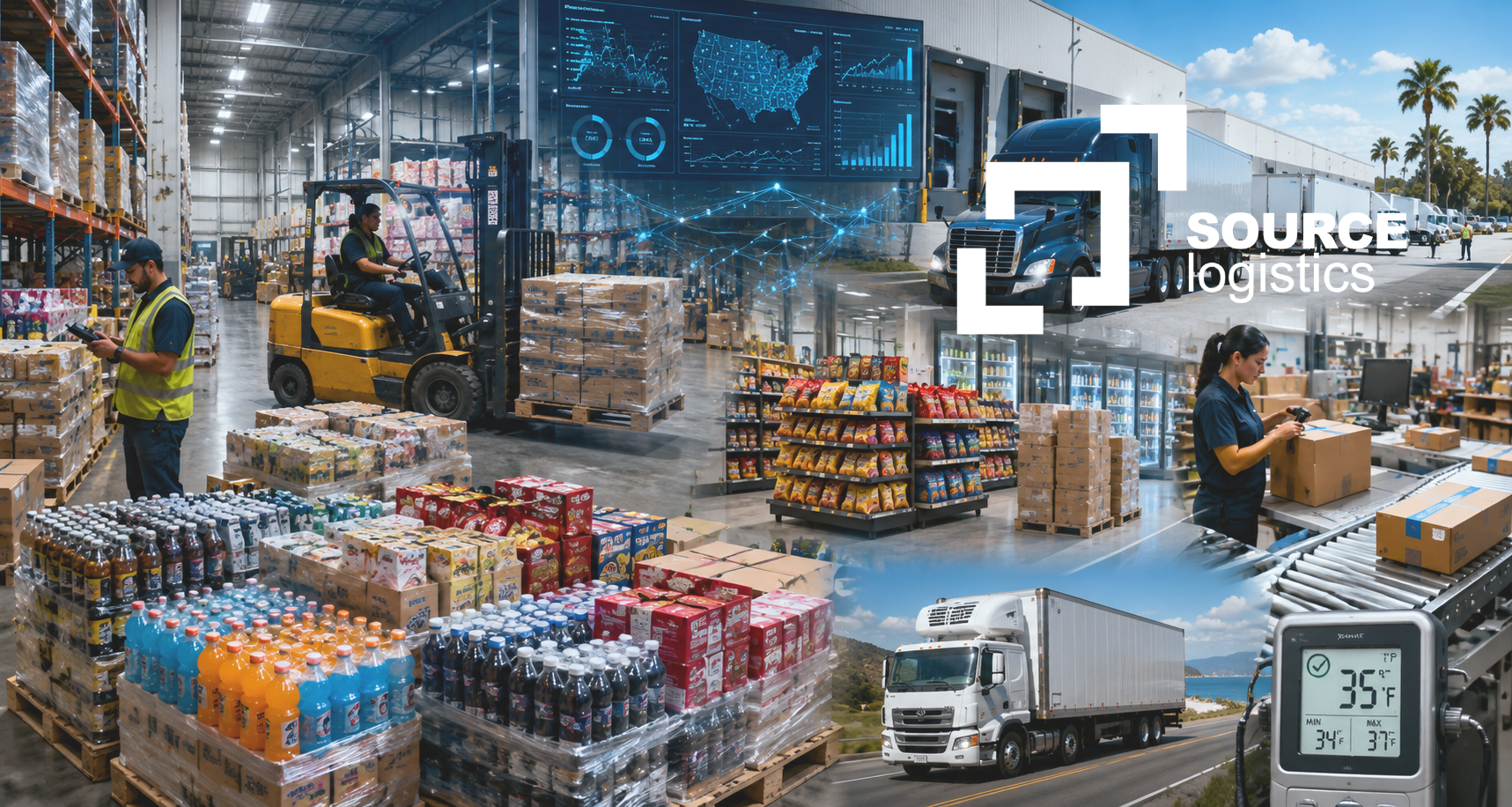
Source Logistics is a CPG-specialized 3PL with more than 25 years of experience serving Food and Beverage, CPG, and Grocery Retail brands. With a network that spans over 25 locations and 5.8M + square feet of warehousing space across the U.S., Source combines multi-temperature capabilities, SQF Level 3 certification, and integrated technology for end-to-end visibility.
Learn how Source can support your CPG logistics operations.