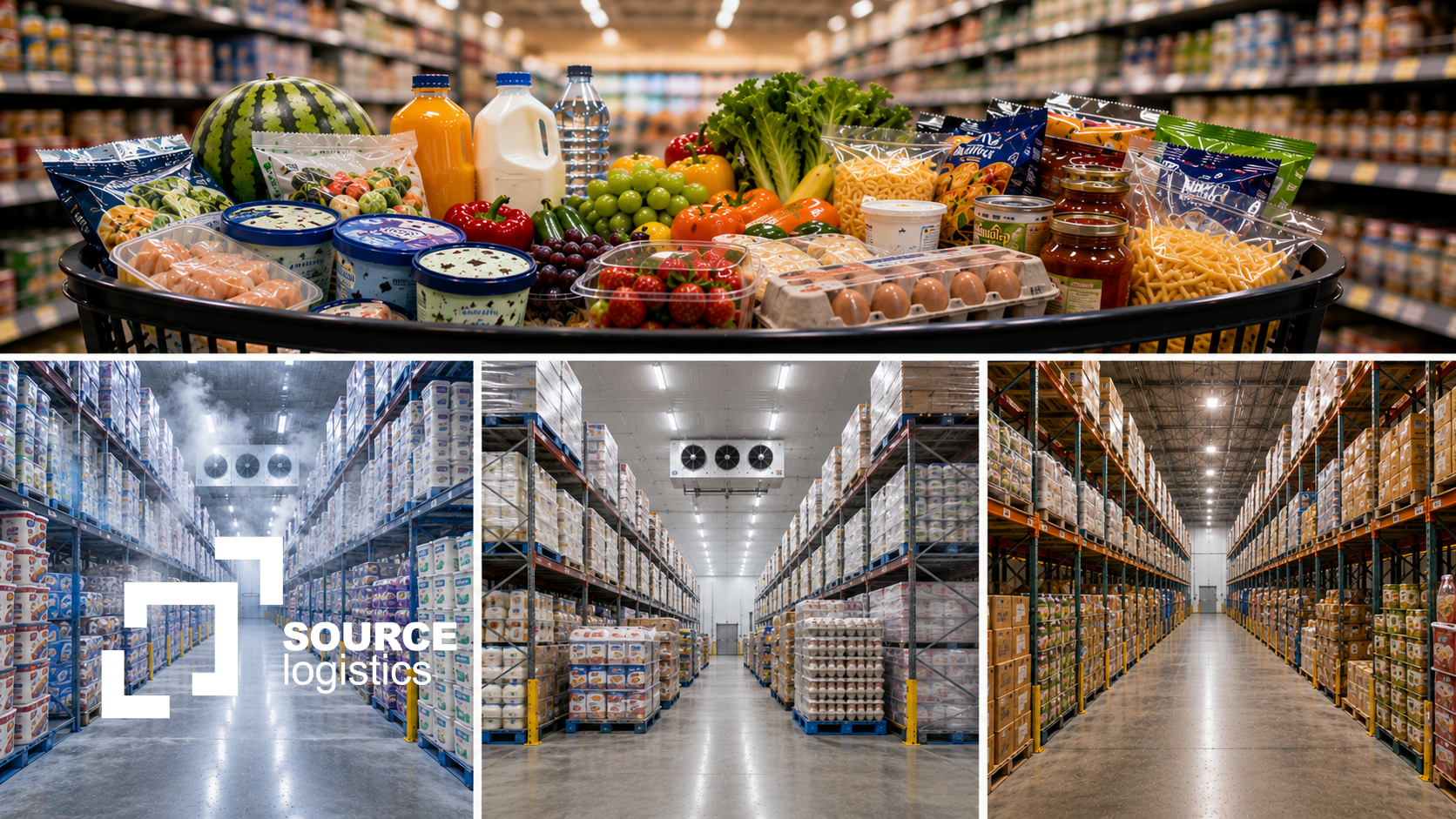
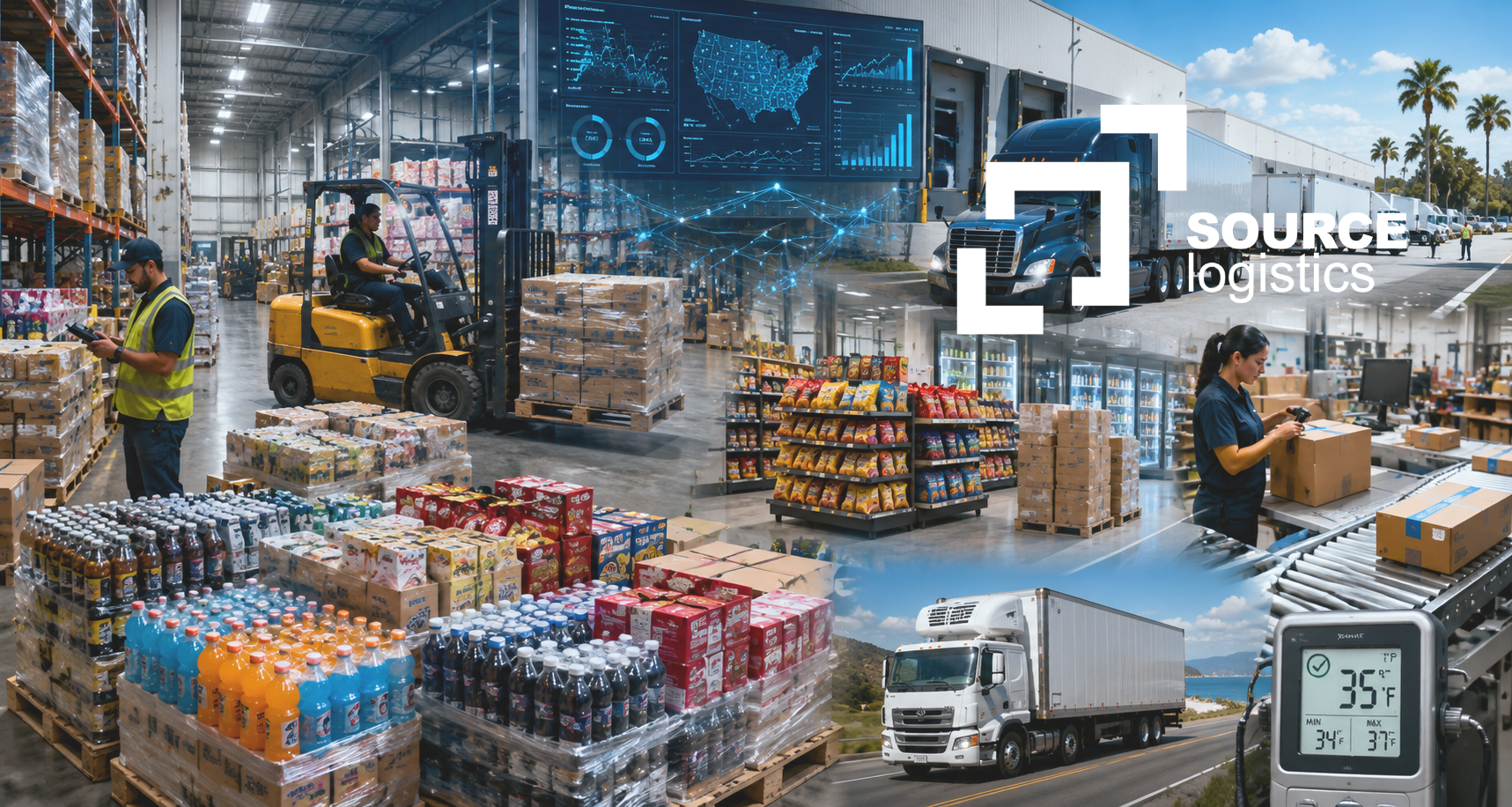
Grocery logistics becomes materially harder between Memorial Day and Labor Day. Seasonal demand lifts velocity across beverages, snacks, frozen foods, and outdoor meal categories. Ad week promotions compress replenishment windows. Warm weather raises the stakes for cold chain management. Retailers reduce tolerance for out-of-stocks during their highest-traffic period of the year.
This guide covers the specific steps grocery brands and suppliers can take to prepare their supply chains for the summer surge, organized by planning horizon.
Why Summer Is a High-Stakes Period for Grocery Logistics
Grocery logistics operates on thin margins with zero tolerance for execution gaps. Out-of-stocks during a promotional period cost the supplier the immediate sale, risk planogram space in the next reset, and can trigger OTIF penalties from the retailer. FMI data shows that U.S. supermarkets carry an average of 31,795 SKUs (FMI, 2024), meaning competition for shelf presence and replenishment priority is constant.
Summer adds three compounding pressures: higher-than-average velocity in seasonal categories, ad week promotions that can clear normal weeks of inventory in days, and temperature risk for refrigerated and frozen products moving through a warmer ambient environment. Supply chains that handle normal weekly volumes without friction may lack the capacity or flexibility to absorb these pressures simultaneously.
90 to 120 Days Out: Capacity and Commitment
Summer preparation starts before spring ends. The actions brands take in February and March determine whether they have the logistics infrastructure in place by May.
Reserve cold storage capacity: Refrigerated and frozen storage becomes constrained during summer as multiple suppliers compete for temperature-controlled space. Pre-contracting capacity with a 3PL that operates multi-temperature facilities ensures access to the right environment when demand peaks. Source Logistics operates facilities with continuous monitoring and chain-of-custody documentation.
Confirm transportation relationships: Reefer capacity on spot markets during summer can cost significantly more than contracted rates. Establishing carrier relationships or working through a 3PL with pre-contracted reefer capacity locks in predictable cost and service reliability.
Align promotional commitments with logistics capacity: Retailer promotional windows require inventory to be in-network before the promotion starts. Map each promotional commitment to an inbound receipt date and confirm the 3PL can receive, process, and stage that inventory in time.
60 to 90 Days Out: Inventory Positioning
Once capacity is secured, the focus shifts to getting the right inventory into the right distribution nodes.
Pre-position inventory by geography: Grocery replenishment cycles are regional. A brand selling into a Midwest grocery chain needs inventory staged in a Midwest facility, not in a West Coast DC. Source Logistics operates facilities in Chicago, Dallas, Houston, Los Angeles, Portland, and New Jersey, allowing brands to position inventory close to their retail accounts before demand peaks.
Complete promotional builds: Seasonal multipacks, display pallets, and promotional kits need to be assembled before the first ad week ships. Value-added services performed at the 3PL can complete these builds in parallel with standard replenishment, without delaying normal order flow.
Verify compliance configurations for each retailer: Labeling requirements, pallet patterns, date code formats, and ASN specifications vary by account. Reviewing and confirming these configurations before the promotional window opens prevents chargebacks during the highest-volume period of the year.
30 to 60 Days Out: Execution Readiness
As the summer window approaches, the emphasis shifts from planning to operational readiness.
Audit inventory accuracy: Conduct a physical or system-verified inventory count across all distribution points. Discrepancies between system records and actual inventory cause fill rate failures at the worst time.
Establish safety stock thresholds: Set minimum inventory levels for high-velocity summer SKUs at each DC location. Automated reorder triggers in a WMS eliminate the manual monitoring burden during peak weeks.
Test EDI and ASN workflows: Confirm that ASN submission, PO acknowledgment, and label generation are working correctly for all active retail accounts. EDI errors during peak season create receiving delays and chargeback exposure.
During Peak Season: Real-Time Response
Once summer demand is live, grocery logistics management becomes a daily monitoring function. Key metrics to track:
- Fill rate by SKU and retail account
- Replenishment cycle time from retailer order to DC receipt
- Cold chain temperature logs for all refrigerated and frozen shipments
- OTIF performance by retailer
- Inventory velocity against safety stock thresholds
Real-time WMS visibility, integrated with your ERP and retail account EDI feeds, provides the data required for same-day decision-making. Source Logistics integrates with SAP, Oracle NetSuite, Microsoft Dynamics, and EDI systems, giving grocery suppliers a unified view across all distribution points.
The Role of a 3PL in Summer Grocery Logistics
A 3PL with grocery specialization handles the operational variables that in-house logistics teams struggle to absorb during peak season: surge capacity without fixed overhead, retailer-specific compliance workflows built into the fulfillment process, multi-temperature storage with continuous monitoring, and transportation capacity that does not depend on the spot market.
Source Logistics has served grocery brands and CPG suppliers for more than 25 years. The network includes multi-temperature warehousing, SQF Level 3 and FDA-registered facilities, rail-served distribution hubs, and a fulfillment operation designed around the compliance demands of national and regional grocery retail accounts. For distribution strategies that support grocery logistics, see: CPG Fulfillment & Distribution Strategies.
Start Your Summer Readiness Planning
The grocery brands that perform best during summer peak season start planning in the first quarter. Securing cold chain capacity, positioning inventory close to retail accounts, and confirming compliance workflows before the first promotional window means the summer season is managed rather than reacted to.