Peak season pressure does not start in Q4. For most food and beverage supply chains, inventory builds, promotional activity, and shifting customer demand begin months earlier, often leaving supply chain teams scrambling for capacity right when flexibility is already limited.
The Problem With Waiting Until You Need Space
The challenge is rarely just "finding more space." It is finding capacity that actually supports the way a food or beverage operation runs: temperature control for sensitive SKUs, selective racking for high SKU variety, and inventory rotation that matches shelf life. Common pressure points supply chain teams describe include seasonal inventory spikes, running out of warehouse space mid-quarter, managing temperature-sensitive products across multiple storage zones, supporting fluctuating pallet volumes tied to promotions, and delaying capital investments because a facility decision feels too permanent to make quickly.
By the time inventory is already arriving, the conversation has shifted from planning to reacting. Preparedness starts well before the season does.
What Flexible Capacity Actually Looks Like
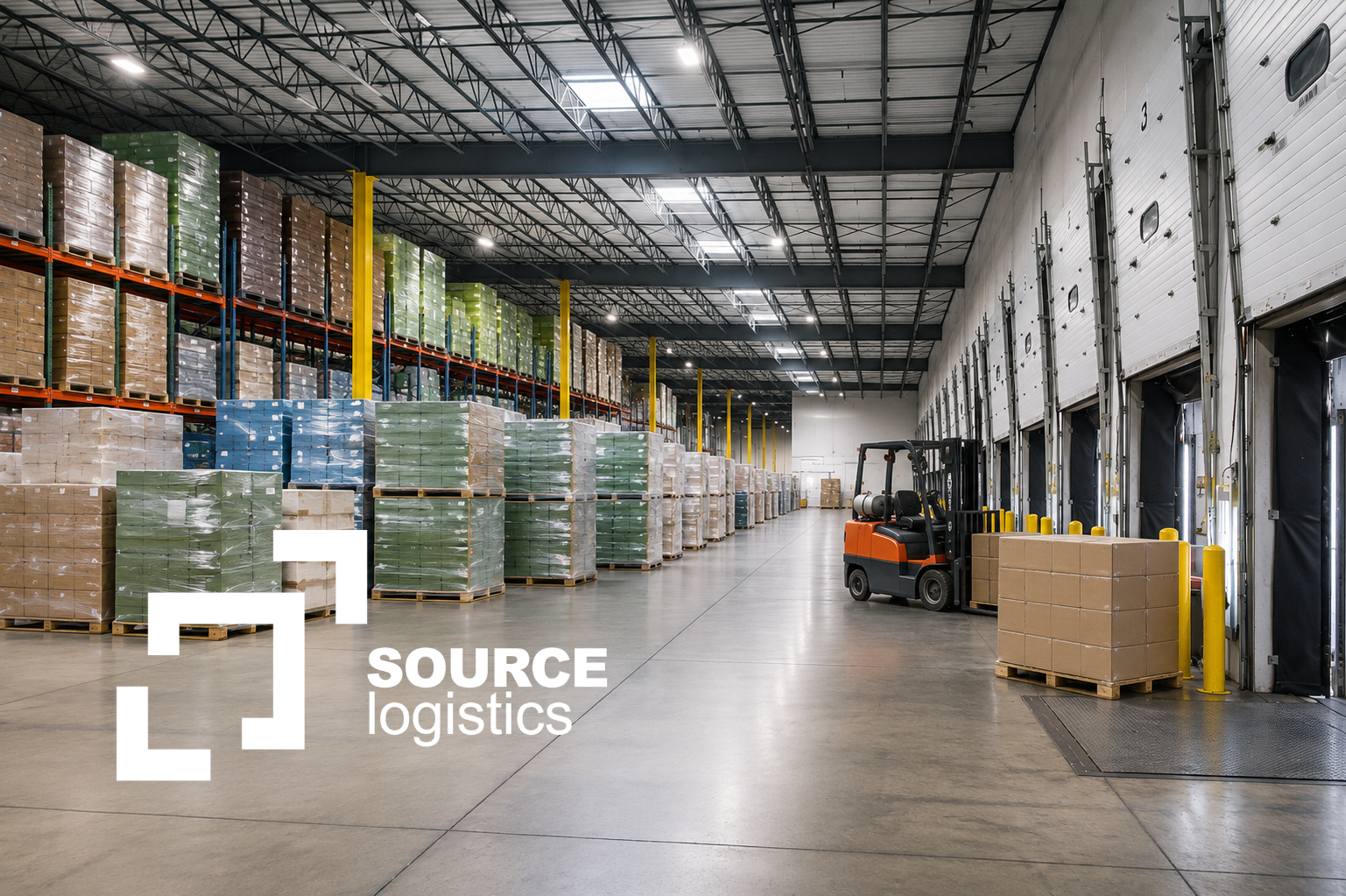
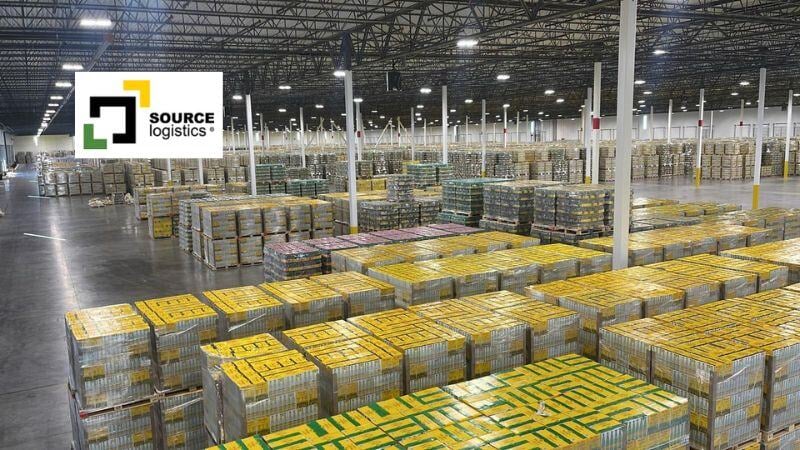
Source Logistics' Des Plaines facility was built specifically to answer that problem. At 515,000 square feet, it provides scalable warehousing support without requiring a permanent infrastructure commitment. That means a food or beverage brand can secure overflow space ahead of a seasonal build, use exactly what the season requires, and scale back down once the promotional window closes.
The facility supports:
- Temperature-controlled storage capabilities for ambient and refrigerated inventory
- Selective racking designed for high SKU variety
- FIFO inventory management
- Floor-stacked pallet-in/pallet-out storage
- Flexible commitment structures instead of fixed, long-term leases
- Direct access to I-94, I-90, I-55, and I-88
That combination is built for organizations that need overflow capacity during peak periods, seasonal inventory support, temperature-controlled storage, flexible pallet commitments, support for mixed inventory profiles, and Midwest distribution reach without adding another vendor relationship to manage.
Why This Matters More Than It Used to
Value-added warehousing and distribution, the category flexible overflow capacity falls under, is now the fastest-growing segment of the third-party logistics market, with the broader U.S. 3PL market projected to grow at roughly 10% annually through 2030 (Research and Markets, 2026). That growth reflects a broader shift: more shippers are choosing to secure flexible capacity ahead of demand rather than build or lease permanent infrastructure sized for a worst-case peak.
For food and beverage brands specifically, that shift is compounded by tightening supplier compliance requirements. Facilities need to be SQF Level 3 and AIB certified, FDA-registered, and retailer-compliant before they can even be considered for overflow capacity, which narrows the field of viable options considerably once a brand actually needs the space.
Building a Capacity Plan Before You Need It
A Midwest capacity assessment typically covers an inventory footprint review, a peak season readiness discussion, distribution network considerations, and recommendations aligned to your specific operating model. Running that assessment months ahead of peak, rather than during it, is what keeps a seasonal spike from becoming an operational scramble.
For related guidance on staging that plan, see 7 logistics questions every growing CPG brand should ask before scaling and what inventory strategy means for food and beverage brands.
Frequently Asked Questions
When should a food or beverage brand start planning for peak season capacity? Ideally months before Q4. Inventory builds and promotional planning typically begin well ahead of the actual demand spike, and flexible capacity is easier to secure before options become limited.
What makes Des Plaines suited to overflow warehousing? Its multi-client model and flexible commitment structures let brands scale capacity up for a season and back down afterward, rather than committing to a full building or a long-term lease.
Does overflow capacity include temperature control? Yes. Des Plaines supports temperature-controlled storage for both ambient and refrigerated inventory alongside standard dry storage.
What should be included in a capacity assessment? An inventory footprint review, a peak season readiness discussion, distribution network considerations, and recommendations aligned to your operating model.
Schedule a Capacity Assessment
If your team is evaluating overflow options ahead of peak season, schedule a capacity assessment with Source Logistics' team.
.png)
.png)