Warehouse safety and compliance in food logistics covers two overlapping areas: the physical safety of the people working in the facility, and the food safety and regulatory requirements that govern how product is handled, stored, and tracked. Both areas matter to food and CPG brands. A warehouse that fails a food safety audit creates recall risk and retailer compliance problems. A warehouse with poor physical safety practices creates liability exposure, labor turnover, and operational disruptions that affect your shipments.
This piece covers what food logistics compliance actually requires, which certifications signal genuine operational discipline, and what to look for when evaluating a warehouse partner's safety record.
Food Safety Regulations That Apply to Your Warehouse
The Food Safety Modernization Act (FSMA), signed into law in 2011 and phased into enforcement over subsequent years, shifted U.S. food safety regulation from response-based to prevention-based. For food and CPG brands, FSMA's most relevant provisions cover preventive controls for human food and the Sanitary Transportation Rule.
Under the Preventive Controls rule, facilities that store food must have a documented food safety plan that identifies hazards, defines preventive controls to address them, and establishes monitoring and corrective action procedures. A warehouse partner that stores your product is a facility covered by this rule. If they cannot produce a current food safety plan on request, that is a compliance gap your brand shares.
The Sanitary Transportation Rule extends food safety requirements to refrigerated carriers and requires that shippers, carriers, and receivers maintain sanitary conditions for food in transit. For food and CPG brands, this means your warehouse partner's receiving and outbound processes need to verify temperature compliance at handoff and document any exceptions.
FDA registration is required for facilities that manufacture, process, pack, or hold food. Your warehouse partner should be FDA-registered, with a current registration that is renewed every two years as required by FSMA.
SQF Certification: What the Levels Mean
Safe Quality Food (SQF) certification is issued by the SQF Institute, a division of the Food Marketing Institute (FMI). It is recognized by the Global Food Safety Initiative (GFSI) and is one of the most widely accepted third-party food safety standards in the U.S. grocery and CPG supply chain.
SQF has three certification levels:
- SQF Level 1: Covers Good Manufacturing Practices (GMP) fundamentals. Appropriate for low-risk storage operations.
- SQF Level 2: Adds a formal HACCP-based food safety plan, documented hazard analysis, and preventive controls. This is the baseline that most major grocery retailers require from their logistics partners.
- SQF Level 3: Builds on Level 2 with a full quality management system, including continuous improvement programs, customer complaint tracking, internal audits, and documented corrective action cycles.
SQF Level 3 is the standard that Source Logistics' facilities operate under. For food and CPG brands selling into Walmart, Kroger, Whole Foods, or Target, SQF Level 3 from your warehouse partner signals that the facility operates with the same rigor those retailers expect from their suppliers.
Annual SQF audits are conducted by independent, SQFI-licensed certification bodies. The audit score and any non-conformances are documented. Brands that require SQF compliance from their warehouse partners should ask to see the most recent audit report, not just the certificate.
Physical Safety Standards in Food Warehouses
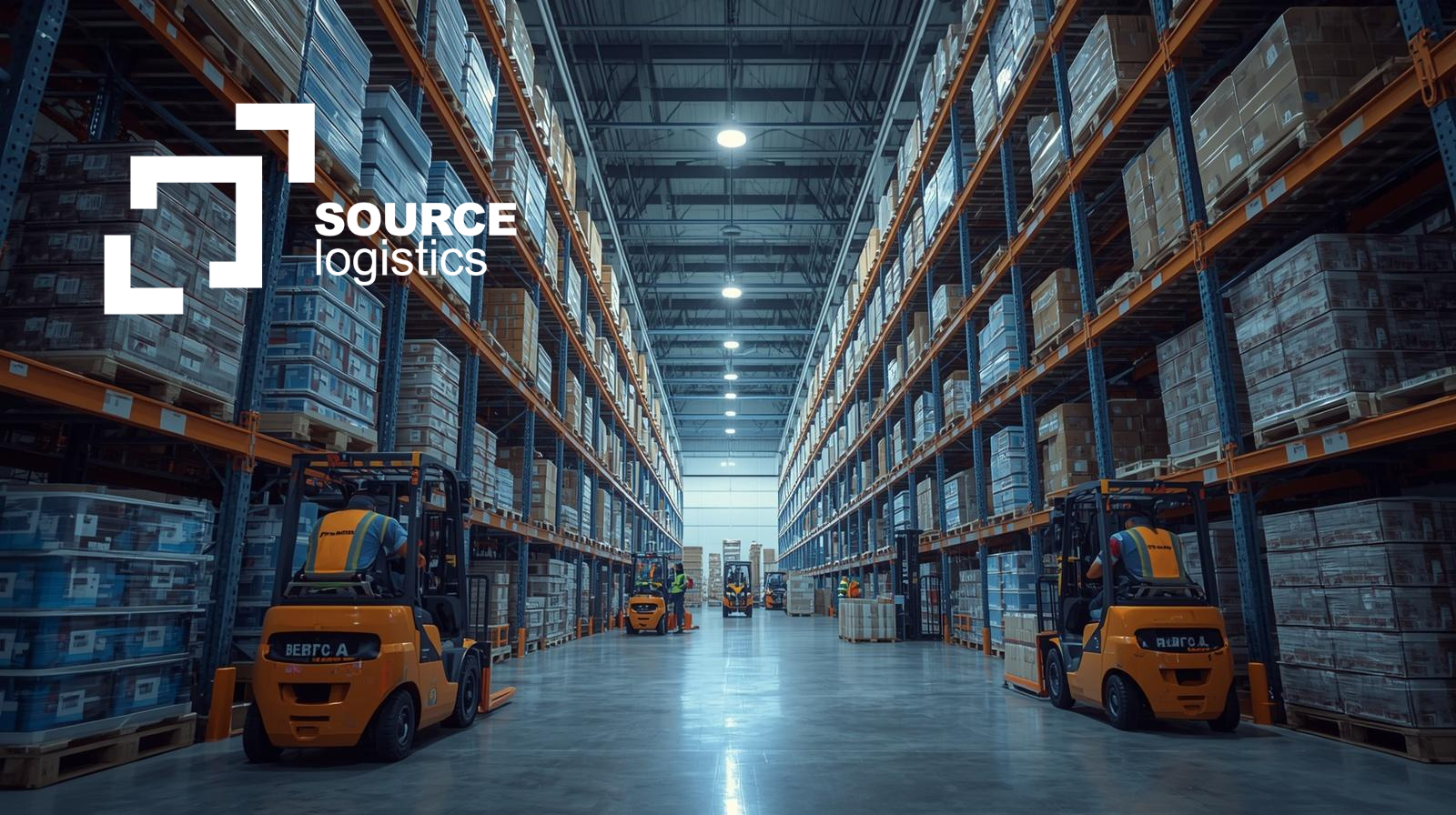
Physical safety in a food warehouse covers the same ground as any industrial facility: forklift operation, racking integrity, slip and fall prevention, emergency egress, fire suppression, and hazardous material handling. OSHA standards apply throughout.
In a food context, physical safety intersects with food safety in several specific ways. Pest management is the most direct: a pest infestation is both a physical safety issue (rodent droppings, insect contamination) and a food safety event. A well-run food warehouse runs a documented Integrated Pest Management (IPM) program with licensed pest control service, monthly inspection logs, and documented corrective actions for any findings.
Racking integrity matters for food products because damaged racking leads to product falls that compromise packaging and create contamination risk at the floor level. Racking inspections should be documented, with any damage tagged and removed from service until repaired.
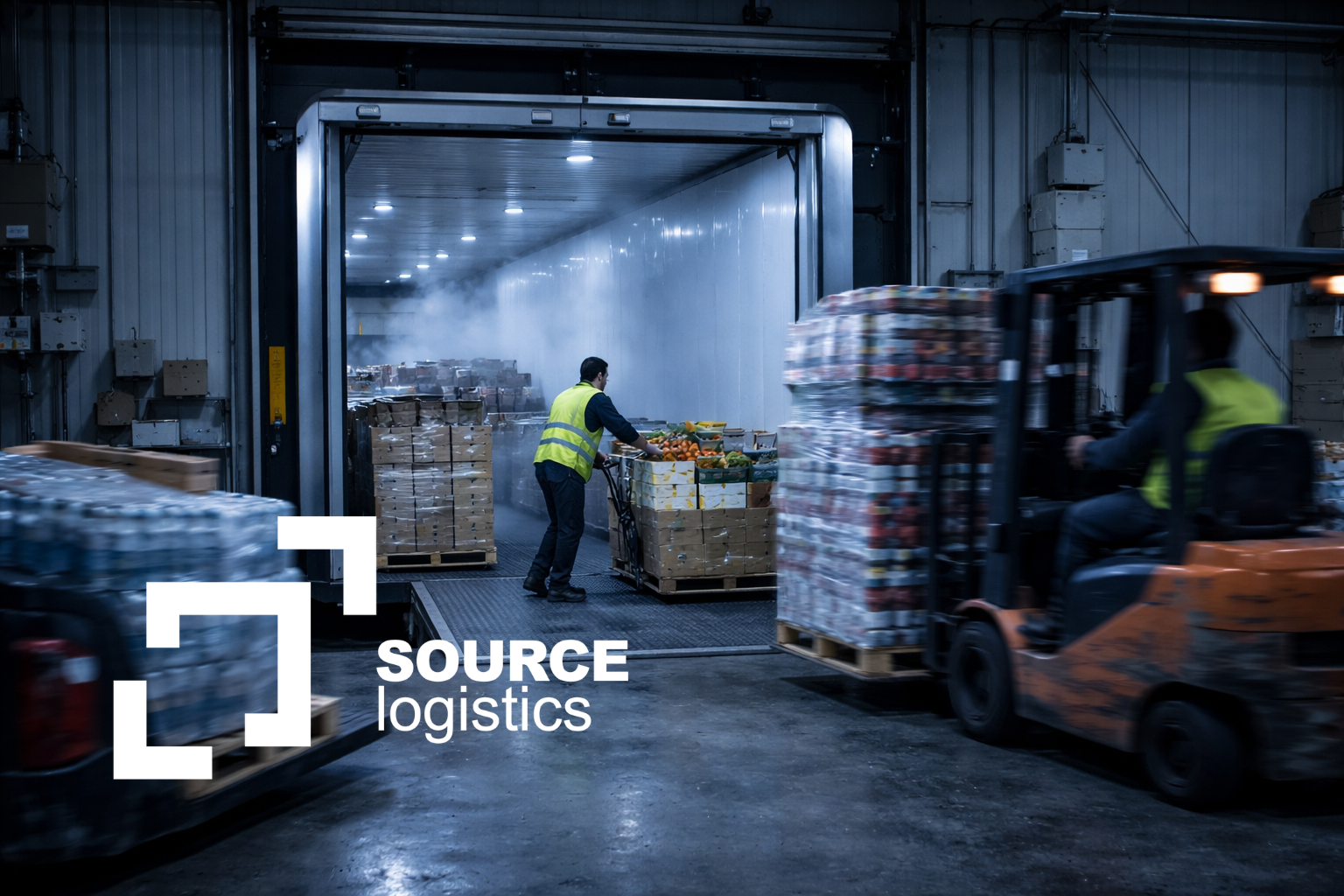
Temperature monitoring is a safety-adjacent process for temperature-sensitive products. Continuous monitoring with automated alerts (rather than manual spot checks twice a day) provides the documentation trail needed for food safety audits and any recall investigation. If a temperature excursion occurs, the documented record should show exactly when it started, how long it lasted, and what corrective action was taken.
How to Evaluate a Warehouse Partner's Safety and Compliance Record
When vetting a food logistics partner's safety and compliance posture, go beyond the certificate.
Compliance performance is often strongest when safety, warehousing, transportation, and inventory management processes are managed within a single operational framework. Integrated logistics environments create clearer accountability and more consistent documentation across every stage of product handling.
The following questions surface operational reality:
- Can you produce your most recent SQF audit report, including the score and any non-conformances?
- When was your last FDA inspection, and what were the findings?
- What is your pest management program, and who conducts it?
- How do you monitor temperature in refrigerated and frozen zones, and what documentation do you provide?
- What is your corrective action process when a safety or compliance issue is identified?
- Which major retailers do you currently ship to, and can you provide references?
Source Logistics maintains SQF Level 3 certification and FDA registration across its facility network, with continuous temperature monitoring, documented pest control programs, and established retailer compliance SOPs. To discuss your food safety and compliance requirements, contact the Source Logistics team.

.png)