
The Source Market Update: November 2026
By Source Logistics on Nov 9, 2026, 6:01:56 PM
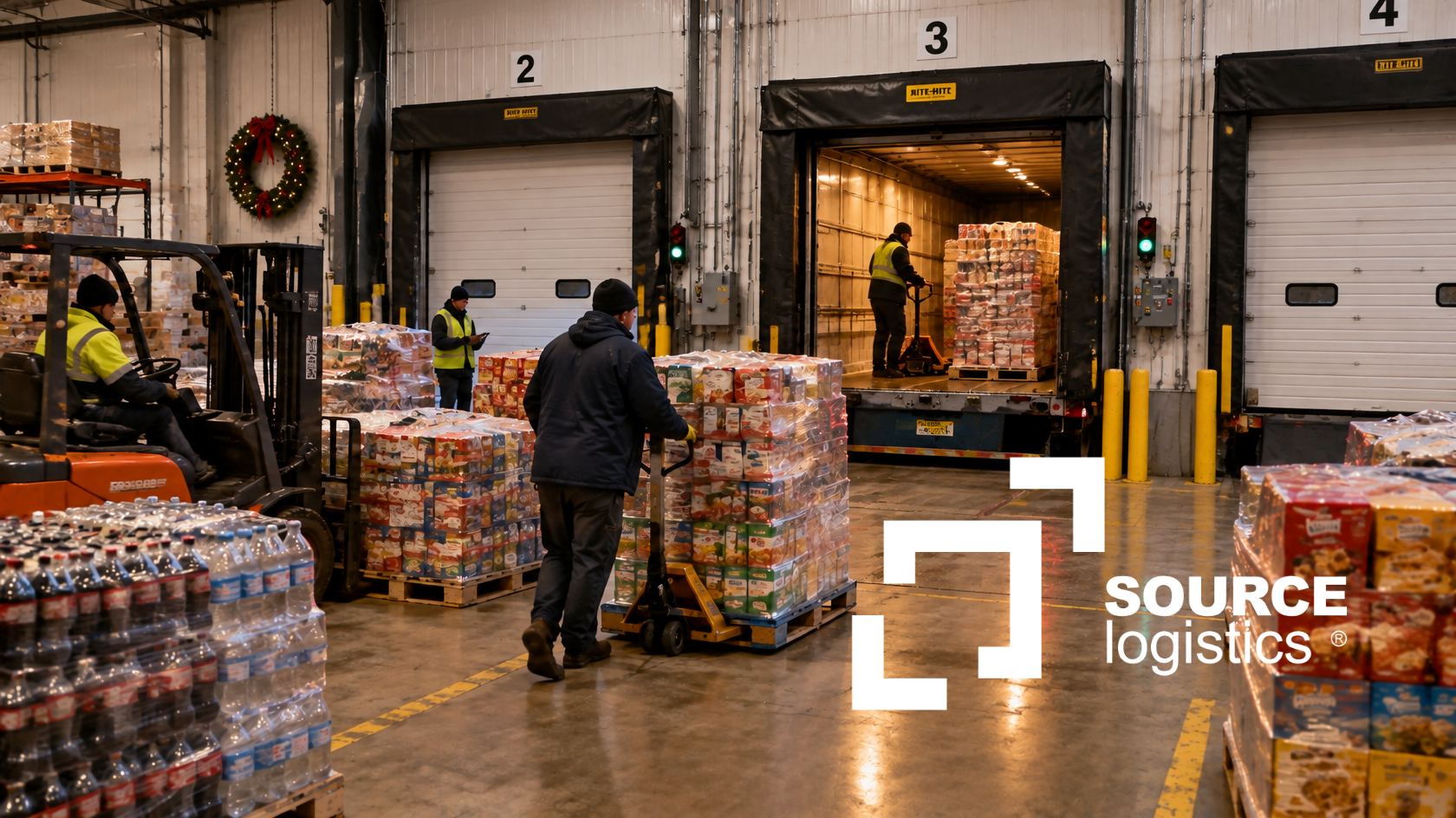
Holiday inventory is reaching retailers. The cost of getting it there is still climbing, and the data suggests that pressure will outlast the holidays.
The October Logistics Managers’ Index, released Nov. 3, rose to 70.7, its second-highest reading in four years, as warehousing and transportation capacity continued to contract. Meanwhile, the National Retail Federation expects holiday sales to grow 4.2%, with nearly two-thirds of consumers planning to do most of their shopping over Thanksgiving weekend.
Last month’s update traced the movement of inventory from wholesalers toward retailers. November’s data confirms the shift, with an important development: upstream warehouses remain under pressure even as retailers position goods for holiday sales. For food, beverage, and consumer brands operating across the Midwest, that creates an immediate execution challenge and a more expensive starting point for 2027.
The Inventory Shift Has Reached Retailers
The LMI’s Inventory Levels index rose eight points to 66.9 in October, its fastest expansion since September 2022. Retailers reported faster growth than wholesalers and distributors, reversing September’s pattern: downstream inventory expansion reached 69.6, compared with 64.1 upstream.
The difference shows up in warehouse space. Upstream Warehousing Capacity registered 37.5, indicating significant contraction, while downstream capacity held at 50.0. The LMI’s researchers read this as retail inventory moving directly to storefronts.
Looking 12 months ahead, upstream firms expect inventory expansion to continue at 71.8, while downstream respondents expect almost none, at 51.8. If those expectations hold, more of the 2027 inventory burden sits with manufacturers, wholesalers, and their logistics partners.
What this means for you: Retail inventory is reaching stores, but upstream storage pressure remains. Review where your inventory sits, how quickly it can reach customers, and whether your network can absorb additional volume without locking you into space you won’t need after peak.
Holiday Demand Is Piling Into Thanksgiving Weekend
If the NRF’s forecast holds, this will be the fastest holiday sales growth since 2021. Timing matters as much as the total: 43% of shoppers plan to start before November, yet most spending is still waiting for Thanksgiving weekend promotions, according to NRF’s October consumer survey.
That leaves little margin for error. Inventory that arrives late, stalls on retailer requirements, or sits in the wrong facility can miss a large share of seasonal demand, and fourth-quarter sales need to meet expectations to justify the cost of this year’s inventory build.
What this means for you: Confirm inventory is staged and ship-ready, along with retail compliance, delivery appointments, and fulfillment capacity, before Thanksgiving promotions begin.
Freight Demand Is Recovering, but Costs Are Rising Faster
Cass’s September data shows shipments up 1.9% year over year, the second straight annual gain after more than three years of declines. Freight expenditures rose far faster, up 20.4%, with truckload linehaul rates up 10.1%. Production is adding demand: ISM’s October Manufacturing PMI rose to 55.5, with Food, Beverage, & Tobacco Products among the largest industries growing.
Capacity isn’t keeping pace. Transportation Capacity sat at 38.0, deep in contraction, and temperature-controlled freight is tighter still: DAT reports reefer spot linehaul rates up 31.2% year over year as October wrapped up.
Diesel is still well over $6 per gallon nationally, and EIA’s October Short-Term Energy Outlook forecasts a 2027 average of $4.49, lower than this year but well above 2025’s $3.66.
What this means for you: Budget 2027 freight around current cost realities. Review consolidation, delivery frequency, and inventory placement, and where transit times allow, consider intermodal. ACT Research notes intermodal contract rates run about 40% below dry van truckload.
Tariff Authority Stays With the White House
Democrats take control of both chambers of Congress in January, but that likely won’t change tariffs soon. Since the Supreme Court ruled in February that IEEPA doesn’t authorize tariffs, the administration has relied on other trade statutes. As EY’s post-election analysis notes, congressional control brings oversight but doesn’t by itself alter existing tariffs or the president’s delegated trade authority, and legislation limiting that authority would likely face a veto.
What this means for you: Plan 2027 landed costs and inventory commitments against today’s tariff structure, with enough sourcing flexibility to respond if executive policy shifts.
Worth a Conversation
November and 2027 present two different problems. The next seven weeks are about execution: inventory staged, retailer requirements met, freight secured. 2027 is about cost: a warehouse footprint sized to where inventory will sit, and transportation and fuel budgets built on a higher floor. Treat this holiday season as a stress test, and build a 2027 network that absorbs peak without carrying peak costs year-round.
Connect with our team to talk through your distribution strategy for the rest of 2026 and into 2027.