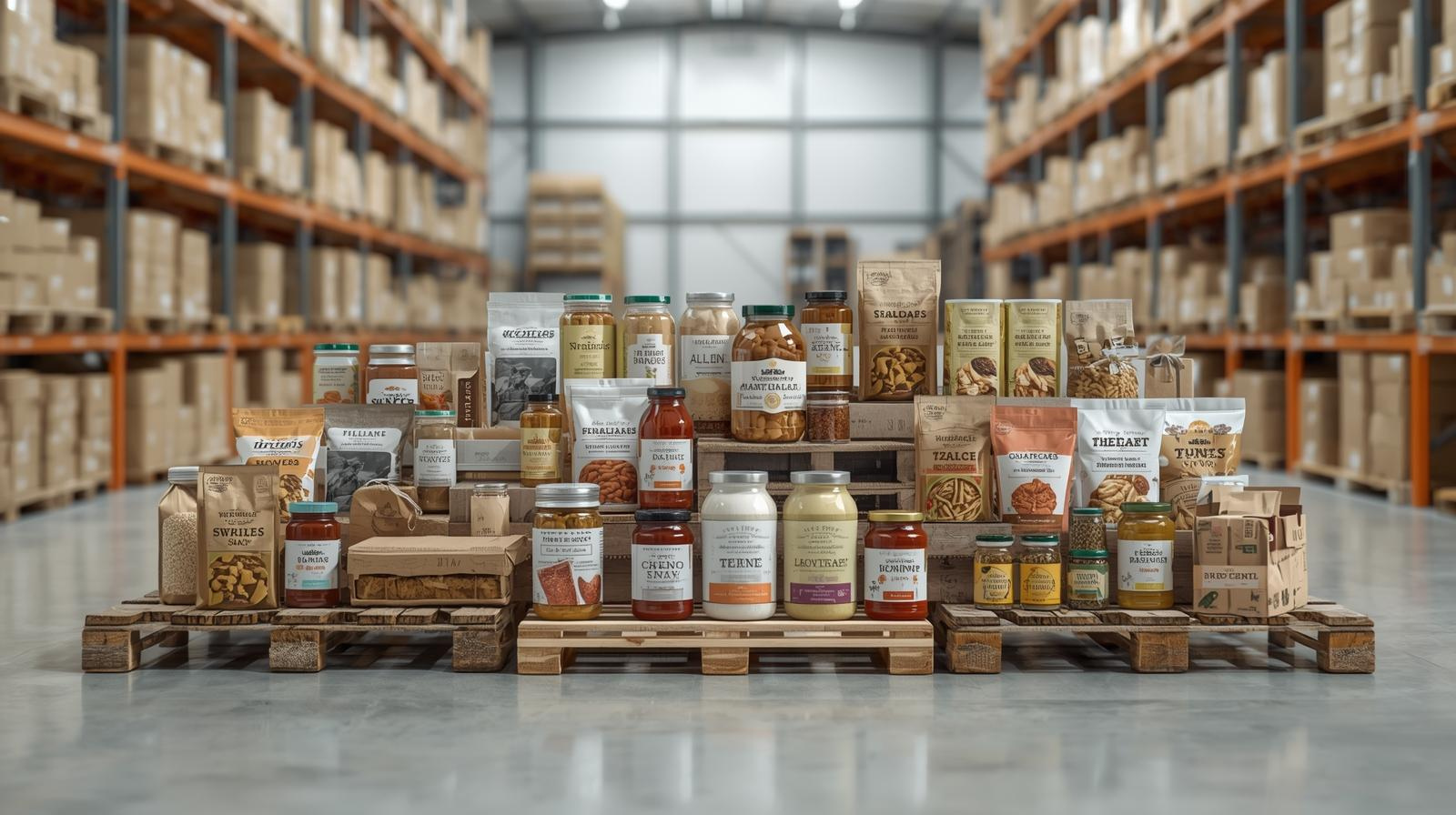
Retail compliance didn’t simplify in 2026. It fractured.
Instead of converging around shared standards, retailers continued to customize routing guides, labeling requirements, OTIF (On-Time In-Full) thresholds, traceability expectations, and chargeback logic – often by category, channel, of fulfillment model.
For brands and operators heading into 2026, the challenge isn’t understanding compliance in theory. It’s executing multiple versions of compliance at once.
Fragmentation is Being Driven by Policy and Retailer Action
Compliance complexity isn’t anecdotal – it’s structural.
On the regulatory side, the U.S. Food and Drug Administration finalized the Food Traceability Rule under FSMA 204, expanding recordkeeping requirements for foods on the Food Traceability List. While enforcement of the rule will not likely begin until 2028, the rule will require firms to capture and maintain detailed records tied to critical tracking events and key data elements, with implications across manufacturing, warehousing, and distribution.
At the same time, retailers are not waiting for regulatory alignment. Many are establishing retailer-specific traceability, ASN, labeling, and packaging standards that extend beyond baseline federal requirements – often with their own timelines and interpretations.
The result is not simplification, but layering.
The Myth of ‘One Compliance Playbook’
Despite these changes, many organizations still operate as if compliance can be standardized into a single playbook:
- One labeling workflow
- One routing guide interpretation
- One OTIF benchmark
- One exception process
That assumption no longer holds.
Major retailers continue to publish and enforce proprietary supplier standards, often combining delivery performance with packaging, labeling, and documentation requirements.
For example, programs like Walmart’s Supplier Quality Excellence Program (SQEP) tie OTIF performance directly to broader compliance expectations, reinforcing that delivering timing is only one part of a much larger execution framework.
In practice, compliance today is contextual, not universal.
Why Compliance Failures Spike During Promotions and Launches
Compliance issues rarely surface during steady-state operations. They spike during moments of change.
Common triggers include:
- New product launches
- Seasonal or cultural promotions
- Assortment resets
- Volume surges tied to retail programs
These moments expose gaps in:
- Label accuracy
- Pack configuration
- ASN and documentation handoffs
- Routing logic alignment
What appears downstream as a fulfillment failure is often rooted upstream in misaligned workflows or incomplete interpretation of retailer requirements.
OTIF is Widely Used, But Not Widely Aligned
OTIF is often described as a shared industry standard. In reality, its execution varies widely.
Thresholds, measurement logic, grace periods, and penalty structures differ by retailer and program – creating multiple interpretations of what “on time” and “in full” actually mean.
Supply chain analysis from platforms like FourKites highlights OTIF as a “moving target,” particularly as retailers tighten expectations while applying them differently across networks.
This variability reinforces a broader truth: even common metrics are implemented in fragmented ways.
The Hidden Operational Cost of Retailer-Specific Workflows
Retailer customization carries a cost that doesn’t always show up in planning models.
Operational impacts often include:
- Increased labor variability
- Rework and relabeling
- Missed delivery windows
- Chargebacks and deductions
- Slower time-to-shelf
These costs compound quickly when compliance is handled manually or downstream – especially in Food & Beverage and Grocery Retail, where tolerance for error is low.
Industry Groups Acknowledge the Complexity
Trade organizations have also recognized the growing burden of divergent compliance requirements.
The Food Marketing Institute has published traceability and compliance guidance acknowledging that retailers and suppliers must navigate non-uniform expectations across partners, systems, and categories.
Rather than prescribing a single model, the guidance emphasizes coordination, interpretation, and execution discipline – further underscoring that fragmentation is now part of the operating reality.
What High-Performing Networks Do Differently
The most effective operators don’t try to eliminate complexity. They design for it.
Embedded Compliance, Not Bolt-On Fixes
Leading networks embed retailer-specific compliance directly into warehouse workflows:
- Retailer-specific labeling at the point of fulfillment
- Kitting and prep handled inside the facility
- Documentation aligned to routing logic
This reduces rework, shortens cycle time, and lowers execution risk.
Clear, Interpretable Instructions Across Teams
Misinterpretation remains one of the most common causes of compliance failure – especially in fast-moving environments.
Bilingual teams and standardized internal documentation help ensure:
- Routing guides are followed correctly
- Label specs are applied consistently
- Exceptions are escalated early
Clarity becomes a competitive advantage.
Fragmentation Isn’t the Problem, Unpreparedness Is
Retail compliance will continue to fragment. Retailers will continue to customize.
The brands and operators that succeed in 2026 won’t be waiting for standards to converge. They’ll be operating prepared to execute across variability, whatever Food Traceability Rule enforcement looks like over the next couple of years.
Prepare Your Operation for the Next Phase of Compliance
As compliance requirements continue to evolve, success depends less on rigid rules and more on operational readiness.
Source Logistics works with Food & Beverage and grocery brands to embed retailer-specific compliance – labeling, kitting, documentation, and routing – directly into warehouse workflows, reducing rework, chargebacks, and execution risk.
Contact Source Logistics to discuss how your operation can keep pace with increasingly fragmented retail compliance requirements in 2026 and beyond.
.png)