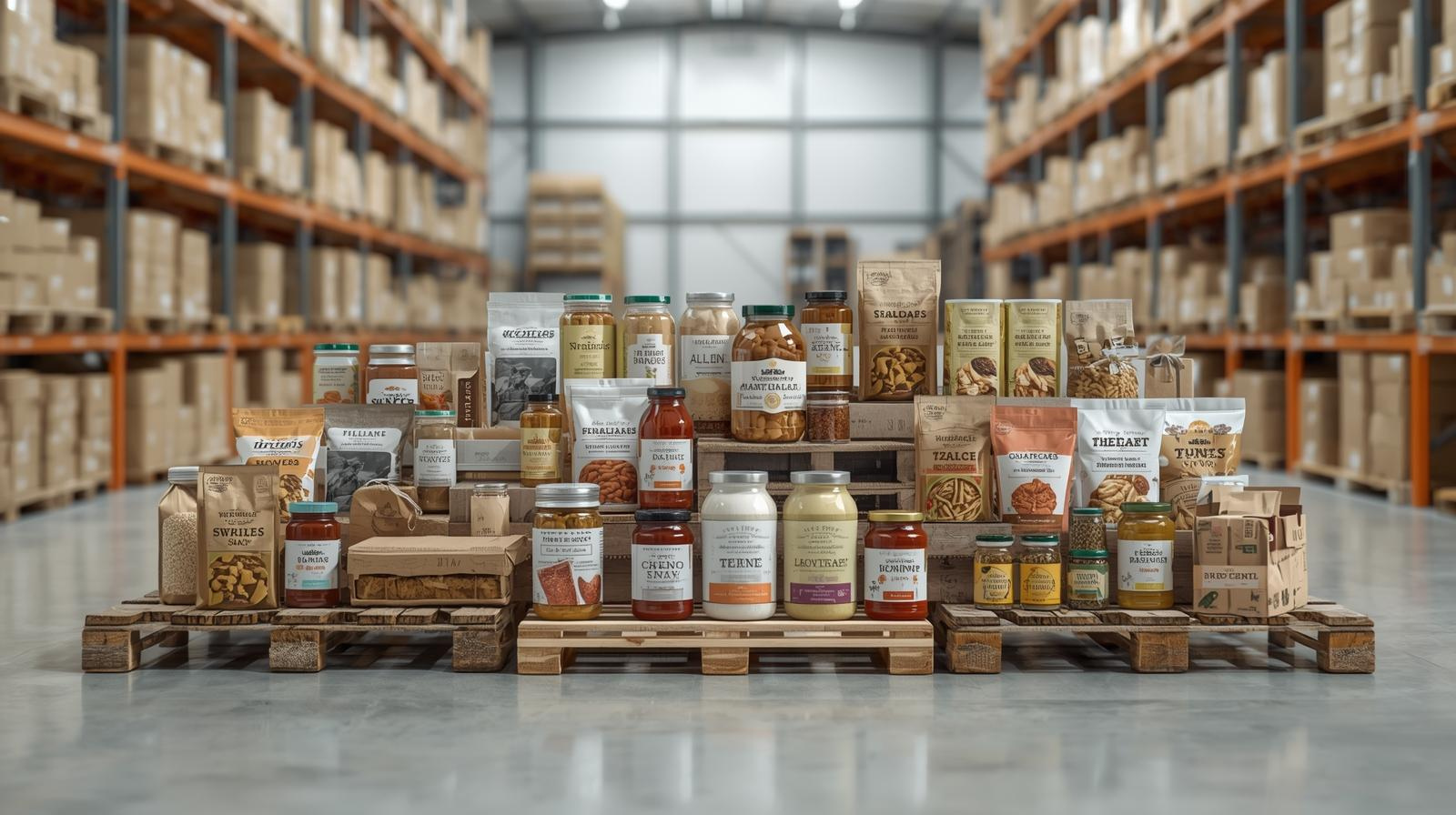
Cold chain logistics for food and beverage is the practice of maintaining required temperature conditions throughout every stage of storage, handling, and transport for perishable or temperature-sensitive products.
For food brands, that means keeping frozen meals at or below 0°F from the DC to the store shelf, maintaining refrigerated dairy at 34 to 38°F across a multi-stop truckload, and managing controlled-ambient conditions for products that degrade outside a specific humidity and temperature band. A single break in that chain (a pre-cool skipped before loading, a door held open too long during picking) can compromise an entire shipment.
Under the FDA's FSMA Sanitary Transportation Rule, shippers and carriers share documented responsibility for maintaining temperature conditions throughout transit, with records retained for 12 months (FDA, 2016). That regulatory baseline sets the floor. Retail compliance expectations often exceed it.
What Temperature Zones Matter in Food & Beverage Cold Chain?
Cold chain logistics for food and beverage covers four primary temperature zones. Each has distinct infrastructure and documentation requirements:
- Frozen: At or below 0°F. Required for prepared meals, proteins, and ice cream. Equipment needs redundant refrigeration and continuous monitoring.
- Refrigerated/chilled: 34 to 38°F. Covers dairy, fresh proteins, produce in some categories, and beverages. Most sensitive to door-open time during order picking.
- Controlled ambient: Typically 55 to 75°F with humidity management. Used for wine, chocolate, certain produce, and shelf-stable products with temperature sensitivity.
- Multi-temperature: Some shipments combine frozen and refrigerated SKUs in a single load, requiring validated segregation between zones with no cross-contamination of temperature ranges.
A 3PL without purpose-built infrastructure for all four zones forces brands to split inventory across multiple providers, adding cost, complexity, and handoff risk. Source Logistics' temperature-controlled logistics operation covers all four zones in a unified network.
Best Practices for Maintaining Cold Chain Integrity
The USDA estimates that 30 to 40 percent of the U.S. food supply is lost or wasted at retail and consumer levels (USDA ERS, 2023). Logistics-related breaks in the cold chain contribute to that figure. Most are preventable with the right procedures in place.
Pre-cool before loading. Transport vehicles must reach target temperature before product is loaded. Loading warm product into a chilled trailer does not quickly bring product temperature down. It creates a risk window that can last for hours and trigger temperature excursions by delivery.
Control time out of environment (TOE). Every minute a temperature-sensitive product spends outside its required zone during receiving, cross-docking, picking, or staging adds risk. Strict TOE limits, with enforced procedures for what happens when a limit is exceeded, are a baseline requirement.
Use FEFO rotation. First Expired, First Out rotation ensures products closest to their use-by date ship first. Without FEFO enforcement, slower-moving SKUs accumulate expiration risk that becomes shrink or a retailer complaint.
Monitor continuously, not on arrival. Temperature checks at receiving or delivery tell you what happened at one moment. Continuous monitoring with deviation alerts tells you when something started going wrong, giving you time to respond before product is compromised.
Document everything. Chain-of-custody logs, temperature histories, and seal checks are not just compliance documentation. They are the evidence base for disputes with carriers, retailers, or regulators. The Source customer portal provides visibility into temperature data and order status in real time, supporting audit readiness at every point.
Technology That Supports Cold Chain Performance
Manual temperature logs and clipboards are not sufficient for brands with retail exposure or regulatory obligations. The technology stack for a well-run food and beverage cold chain includes:
- Continuous temperature monitoring with automated alerts when readings deviate from set points
- WMS integration for Lot, Batch, and Expiration tracking tied to FEFO rotation rules
- EDI connectivity for advance ship notices (ASNs), SSCC generation, and ERP integrations
- Customer visibility tools providing real-time inventory snapshots and temperature histories
Systems integration that connects your ERP directly to your 3PL's WMS eliminates manual reconciliation and provides the inventory accuracy that retail compliance requires.
Frequently Asked Questions: Cold Chain Logistics for Food & Beverage
What is a temperature excursion in food logistics? A temperature excursion is any period during which a product is held outside its required temperature range. Even brief excursions can accelerate bacterial growth, reduce shelf life, or trigger a retailer rejection. FSMA requires documented response protocols when excursions occur.
How do I know if my 3PL is maintaining cold chain integrity? Look for continuous monitoring with automated deviation alerts, chain-of-custody documentation, and a customer portal that provides on-demand access to temperature histories. A provider that can only produce temperature data on request is not monitoring continuously.
What is FEFO and why does it matter? FEFO stands for First Expired, First Out. It is a product rotation method that prioritizes shipping products with the earliest expiration date first. Without FEFO, slower-moving SKUs accumulate near their expiration dates and create shrink risk, or a non-compliant shipment that a retailer rejects.
What temperature does the FDA require for refrigerated transport? Under the FSMA Sanitary Transportation Rule, refrigerated transport units must be pre-cooled to 41°F or below before loading, and refrigerated products must be received at 41°F or below (FDA, 2016).
For brands managing frozen, refrigerated, or controlled-ambient inventory, the difference between a reliable cold chain and a preventable loss is infrastructure, procedures, and monitoring. Talk to an expert about how Source Logistics' food and beverage logistics services can protect your product from plant to shelf.